
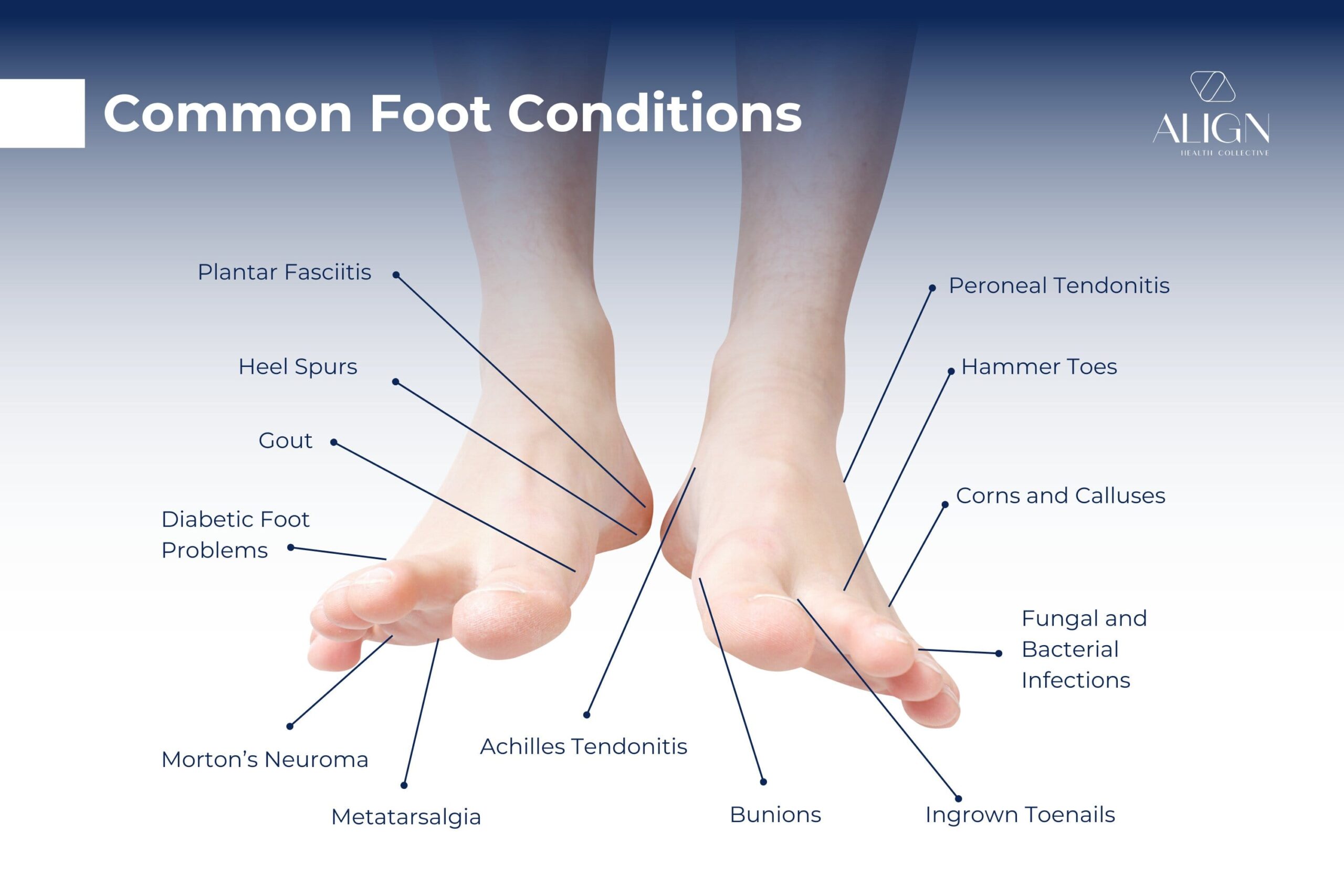

Foot pain is a common issue, with research indicating that 24% of people over the age of 45 and a large portion of others experience foot conditions of some kind. Recognising the symptoms and causes of foot pain is the first step toward finding relief, and a foot pain chart like the one below is one of the easiest ways to identify common foot conditions.
At Align Health Collective, we treat all kinds of foot and ankle conditions with an emphasis on fixing the root cause, not just the symptoms. Contact us today and let’s see how we can help you with your foot pain!

1. Plantar Fasciitis
Plantar fasciitis is inflammation of the plantar fascia ligament, a thick band of tissue that runs along the bottom of your foot that connects your heel to your toes.
It’s caused by excessive strain on your plantar fascia (the strip of tissue under your arch), leading to small tears and inflammation. The main symptom is sharp heel pain, especially with your first steps in the morning or after rest.
| Causes | Symptoms |
|---|---|
| Overuse of the plantar fascia from prolonged standing, walking, or running | Sharp, stabbing pain in the heel when taking a step after rest |
| Flat feet or high arches, which alter foot mechanics | Pain that gets better with movement but worse after prolonged standing |
| Poor footwear, especially unsupportive shoes or worn-out runners | Tenderness along the bottom of your foot near your heel |
| Sudden increases in activity levels | Increased discomfort after exercise rather than during activity |
| Tight calf muscles or Achilles tendons that limit ankle movement | A tight or stiff feeling in the arch of your foot |
See number 1 on the accompanying foot pain chart.
2. Metatarsalgia
Metatarsalgia is pain and inflammation in the ball of the foot, caused by too much pressure on your metatarsal bones. It often affects people who engage in high-impact activities or wear improper footwear.
| Causes | Symptoms |
|---|---|
| High-impact activities like running or jumping | A burning or aching sensation in your forefoot |
| Wearing high heels or shoes with inadequate cushioning | Increased discomfort when standing, walking, or running |
| Foot deformities like bunions, hammertoes, or high arches | The sensation of having a pebble in your shoe (under your forefoot) |
| Excess body weight, which adds pressure on the forefoot | Numbness or tingling in your toes due to nerve irritation |
| Conditions like arthritis or diabetes that affect foot mechanics |
See number 2 on the accompanying foot pain chart.
3. Morton’s Neuroma
Morton’s neuroma is a painful condition caused by the thickening of tissue around a nerve in the ball of your foot, usually between your third and fourth toes. It’s caused by repetitive pressure on the bottom of the foot, and the resulting compression can lead to ball of foot pain in the nerve.
| Causes | Symptoms |
|---|---|
| Wearing tight or narrow shoes, such as high heels or pumps | A sharp, burning pain in the ball of your foot |
| High-impact activities like running or sports | A sensation of walking on a pebble or having something inside your shoe |
| Foot deformities like bunions, flat feet, or high arches that place stress on the forefoot | Numbness or tingling in the affected toes |
| Trauma or injury to your foot, leading to nerve irritation | Worsening pain when wearing tight shoes or standing for long periods |
See number 3 on the accompanying foot pain chart.
4. Diabetic Foot Problems
Diabetic foot problems include a range of complications that affect your feet due to diabetes, including poor circulation, nerve damage (neuropathy), and a higher risk of infections and ulcers.
They develop due to prolonged high blood sugar levels, which can damage nerves and blood vessels. Symptoms vary depending on the severity of the condition.
| Causes | Symptoms |
|---|---|
| Peripheral neuropathy, leading to reduced sensation in the feet | Numbness, tingling, or burning sensations in the feet |
| Poor circulation in the feet | Loss of feeling, making it hard to detect injuries or temperature changes |
| Increased pressure due to foot deformities or ill-fitting shoes | Slow-healing wounds, ulcers, or infections, particularly on the soles or toes |
| Unnoticed cuts, blisters, or sores that worsen due to a lack of sensation | Skin changes (dryness, cracking, or redness) |
| Fungal infections or skin conditions that develop into more serious issues | Swelling, warmth, or signs of infection |
See number 4 on the accompanying foot pain chart.
5. Heel Spurs
Heel spurs are bony growths that develop on the underside of the heel bone due to long-term stress on the foot. They form when calcium deposits build up over time due to repetitive strain or pressure on the heel. These growths often occur alongside plantar fasciitis but may not always cause pain.
| Causes | Symptoms |
|---|---|
| Long-term plantar fasciitis | Sharp, stabbing pain in the heel, especially when taking the first steps in the morning |
| Repetitive activities such as running, jumping, or prolonged standing | A dull ache in the heel throughout the day |
| Wearing shoes with poor arch support | Increased discomfort after long periods of standing or walking |
| Abnormal walking patterns that increase stress on the heel bone | Tenderness or inflammation at the bottom of the heel |
| Age-related changes in foot structure and fat pad thinning |
See number 5 on the accompanying foot pain chart.
6. Gout
Gout is a form of arthritis caused by a buildup of uric acid crystals in the joints, leading to sudden and severe pain, most commonly in the big toe. It can cause intense inflammation and discomfort during flare-ups, which happen most often at night.
| Causes | Symptoms |
|---|---|
| A diet high in purines (found in red meat, seafood, and alcohol) | Intense pain, often in the big toe, but also in other joints like the ankle or knee |
| Excessive alcohol consumption | Swelling, redness, and warmth around the affected joint |
| Obesity, which increases uric acid levels | Stiffness and tenderness, making it painful to walk or wear shoes |
| Kidney disease or conditions that impair uric acid removal | Recurrent flare-ups that may worsen over time |
| Certain medications, like diuretics, that raise uric acid levels |
See number 6 on the accompanying foot pain chart.
7. Achilles Tendonitis
Achilles tendonitis is inflammation of the Achilles tendon, the thick band of tissue connecting the calf muscles to the heel bone. It results from overuse or repetitive strain on the tendon. Symptoms of Achilles tendonitis often develop gradually.
| Causes | Symptoms |
|---|---|
| Sudden increases in physical activity | A dull or aching pain at the back of your ankle or lower calf |
| Tight calf muscles that pull on the Achilles tendon | Stiffness and tenderness in the tendon, especially in the morning |
| Footwear with poor support or cushioning | Pain that worsens with activity but improves with rest |
| Walking or running on hard or uneven surfaces | Swelling or thickening of your Achilles tendon |
| Age-related degeneration of the tendon | A cracking or creaking sensation when moving your ankle |
See number 7 on the accompanying foot pain chart.
8. Peroneal Tendonitis
Peroneal tendonitis is inflammation of the peroneal tendons, which run along the outer side of the ankle and the side of the foot, and help stabilise the foot. It’s often caused by overuse or repetitive strain and symptoms usually develop slowly over time.
| Causes | Symptoms |
|---|---|
| Overuse from activities such as running, jumping, or hiking | Pain and tenderness along the outer side of the ankle or foot |
| Sudden increases in training intensity or duration | Swelling and warmth around the affected tendon |
| Ankle instability or a history of ankle sprains | Increased discomfort with activity, especially walking or running |
| High arches, which put extra strain on the peroneal tendons | A feeling of ankle weakness or instability |
| Wearing unsupportive footwear or improper running shoes | Pain when turning your foot outward or stretching the ankle |
See number 8 on the accompanying foot pain chart.
9. Bunions
A bunion is a bony bump that forms at the base of the big toe, causing the toe to lean inward toward the other toes. It develops gradually and can lead to pain, swelling, and difficulty wearing shoes.
| Causes | Symptoms |
|---|---|
| Wearing tight, narrow, or high-heeled shoes that push your toes together | A visible bump on the side of your big toe joint |
| Genetic predisposition to foot structure abnormalities | Pain, tenderness, and redness around the bunion |
| Flat feet or low arches that alter your foot mechanics | Swelling or calluses where your big toe rubs against your second toe |
| Arthritis, particularly osteoarthritis or rheumatoid arthritis | Stiffness and reduced movement in your big toe |
| Repetitive stress from standing or walking for long periods | Difficulty finding comfortable footwear due to the bony protrusion |
See number 9 on the accompanying foot pain chart.
10. Hammer Toes
Hammer toes are deformities caused by muscle imbalances, where one or more toes bend abnormally at the middle joint, resembling a hammer shape. They can cause discomfort, difficulty wearing shoes, and may worsen over time if left untreated.
| Causes | Symptoms |
|---|---|
| Wearing tight, narrow, or high-heeled shoes that crowd your toes | A bent or curled toe that doesn’t straighten easily |
| An imbalance between the muscles and tendons controlling toe movement | Pain and pressure on the affected toe, especially when wearing shoes |
| Foot structure abnormalities, such as high arches or flat feet | Corns or calluses forming due to friction against footwear |
| Arthritis, which affects joint flexibility and alignment | Stiffness or limited movement in the affected toe |
| Previous toe injuries that alter tendon function | In severe cases, persistent deformity and difficulty walking |
See number 10 on the accompanying foot pain chart.
11. Ingrown Toenails
An ingrown toenail occurs when the edge of your toenail grows into the surrounding skin. It most commonly affects the big toe, and symptoms can range from mild discomfort to full-blown infection.
| Causes | Symptoms |
|---|---|
| Cutting toenails too short or rounding the edges | Pain and tenderness along the edge of the toenail |
| Wearing tight or narrow shoes that press against your toes | Redness and swelling around the affected area |
| Injury or trauma to your toenail | Increased sensitivity to pressure, such as when wearing shoes |
| Genetics (some people naturally have curved or thick toenails) | Drainage of pus or fluid if an infection develops |
| Fungal infections that cause abnormal nail growth | Overgrown skin or tissue surrounding your nail in severe cases |
See number 11 on the accompanying foot pain chart.
12. Corns and Calluses
Corns and calluses are thickened areas of skin that develop due to repeated friction or pressure. While they’re not harmful, they can cause discomfort, especially when walking or wearing shoes.
| Causes | Symptoms |
|---|---|
| Wearing poorly fitting shoes that cause repeated friction | Pain or tenderness when pressure is applied |
| Walking barefoot frequently | A rough, raised, or waxy patch of skin |
| Foot deformities such as bunions, hammertoes, or high arches | Corns (smaller, more concentrated areas) developing on toes or between toes |
| Repetitive activities that put pressure on certain areas of your foot | Calluses (larger, broader areas) forming on weight-bearing parts of your foot |
| Abnormal walking patterns that increase pressure on specific spots | Dry or flaky skin over the affected area |
See number 12 on the accompanying foot pain chart.
13. Fungal and Bacterial Infections
Fungal and bacterial infections cause skin irritation, itching, and unpleasant odours. These infections thrive in warm, moist environments like sweaty shoes or public showers. Symptoms depend on the type of infection.
| Causes | Symptoms |
|---|---|
| Walking barefoot in damp areas like gyms, pools, or locker rooms | Fungal infections: Itchy, scaly, or cracked skin between your toes |
| Wearing tight or non-breathable shoes that trap moisture | Thickened, discoloured, or brittle toenails |
| Poor foot hygiene, such as not drying your feet properly after washing | Foul-smelling feet due to excessive moisture and fungal growth |
| Sharing towels, socks, or shoes with someone who has an infection | Bacterial infections: Redness, warmth, and swelling in the affected area |
| A weakened immune system or conditions like diabetes that increase susceptibility | Pus or drainage from an open sore or wound |
| Pain or tenderness, especially when walking |
See number 13 on the accompanying foot pain chart.
Common Foot Conditions | Foot Pain Chart FAQs
How Are Foot Conditions Diagnosed?
Foot conditions are diagnosed through a combination of physical examination, medical history, and diagnostic tests. A podiatrist or doctor will assess symptoms, foot structure, and mobility to determine the cause of pain or discomfort. Common diagnostic methods include:
- Physical examination: Checking for swelling, redness, deformities, or tenderness in the foot.
- Gait analysis: Evaluating walking patterns to identify abnormal foot mechanics.
- X-rays: Used to detect fractures, arthritis, bone spurs, or joint misalignment.
- Ultrasound or MRI scans: Helpful for assessing soft tissue injuries like tendonitis or neuromas.
- Blood tests: Used to diagnose inflammatory conditions like gout or infections.
- Skin or nail samples: Taken for fungal or bacterial infections if needed.
When Should You Visit a Health Professional?
You should see a podiatrist or doctor if foot pain persists, worsens, or interferes with daily activities. Early treatment can prevent complications and improve recovery. Seek medical attention if you experience:
- Severe or persistent foot pain that doesn’t improve with rest
- Swelling, redness, or warmth, which may indicate infection or inflammation
- Difficulty walking, standing, or wearing shoes due to foot discomfort
- Numbness, tingling, or loss of sensation, especially if you have diabetes
- Open sores, ulcers, or wounds that are slow to heal
- Deformities like bunions or hammertoes that worsen over time
Back to top: What are Common Foot Conditions?